BRYTER · Product Designer · 2022
Increasing integration discovery in a no-code platform
BRYTER's integration library was growing, but adoption was stalling. Customers only discovered integrations when a CSM told them about one. I researched, designed and shipped an Add-Ons discovery page to change that.
Context
BRYTER is a no-code development platform that lets legal, procurement, and compliance teams build and automate complex workflows. It offers a growing library of integrations with third-party tools — but customers were barely using them.
Problem
Integration development was accelerating, but adoption was stagnating. There were more integrations available than customer success managers (CSMs) could remember or explain. The only way customers learned about integrations was when a CSM happened to mention one.
Low adoption was affecting pricing and sales. The previous Services page offered nowhere to discover or learn about integrations — the feature was effectively invisible.
My Role
- Led discovery and research for the feature
- Created user story maps and explored the data model with engineering
- Conducted user interviews across multiple persona types
- Developed 8 personas spanning the full BRYTER user spectrum
- Mapped user journeys and identified key drop-off points
- Designed and iterated Figma prototypes for usability testing
- Validated with a teaser page before building the full feature
- Analysed results using Heap analytics
Discovery
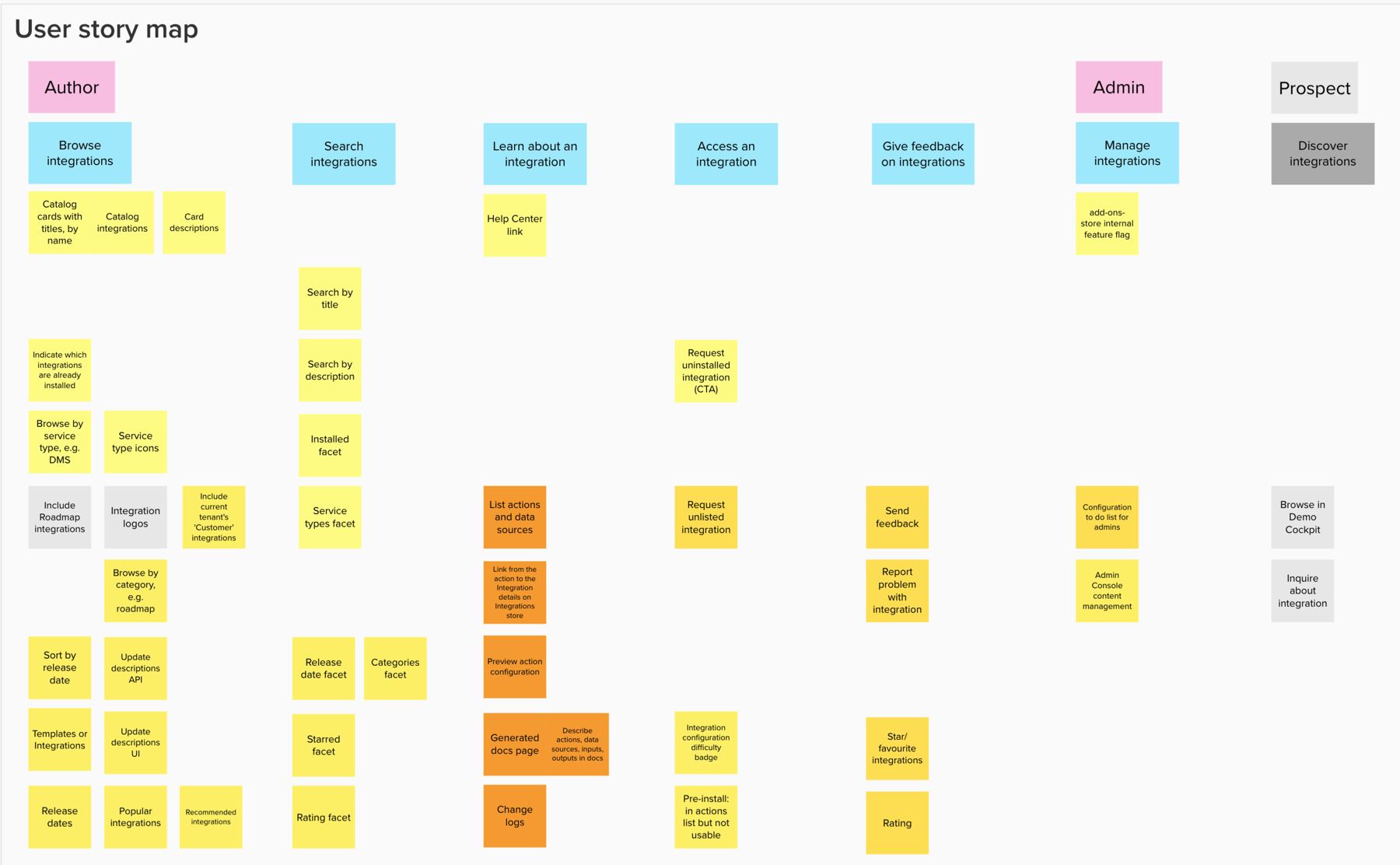
I began by mapping a possible data model alongside engineering to understand the constraints and surface assumptions early. From this, I extrapolated a user story map showing possible gaps in the current experience.
I developed 8 personas — Casey Consumer, Oprah Operator, Emily Expert, Brian Builder, Devin Developer, Abby Admin, Caesar CSM, and Bruno Breiter — spanning the full spectrum of BRYTER users across skill level, role, and context. This was particularly important because the feature sat in the extensibility section, which only certain personas could access.
Research
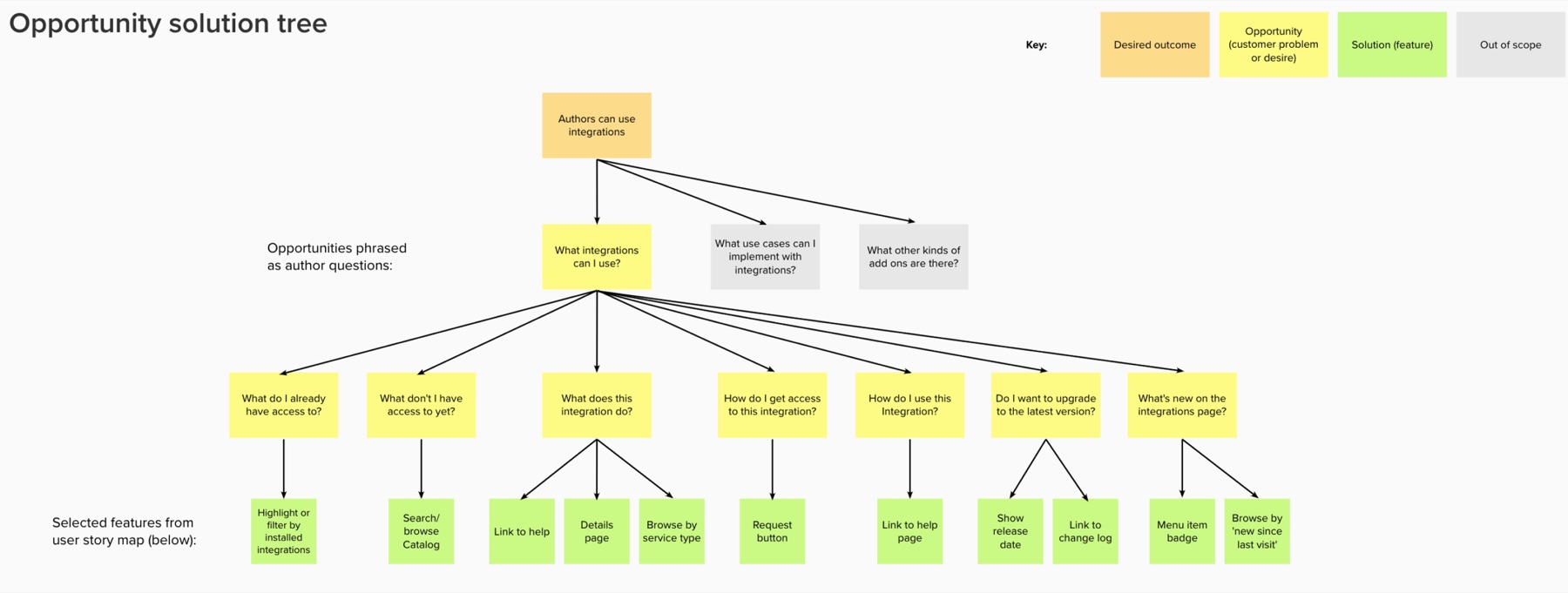
Through user interviews, I confirmed that the only way customers discovered integrations was through CSMs. Increasing ad hoc discoverability — and providing one place to learn and register interest — was the clear direction.
I mapped ordering behaviour and need states across each persona type, noting wide variance in skill level and context that we needed to account for in the design.
Solution
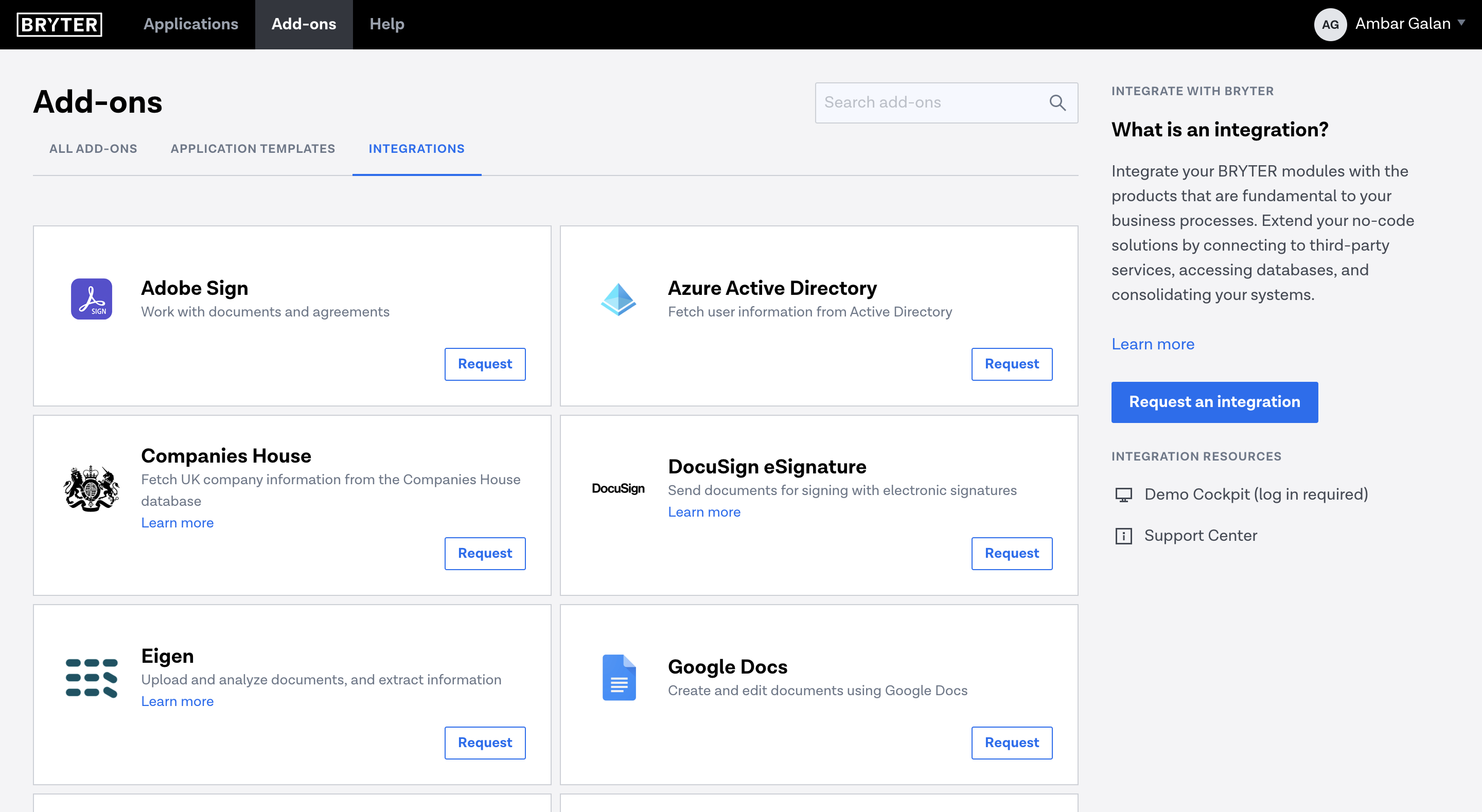
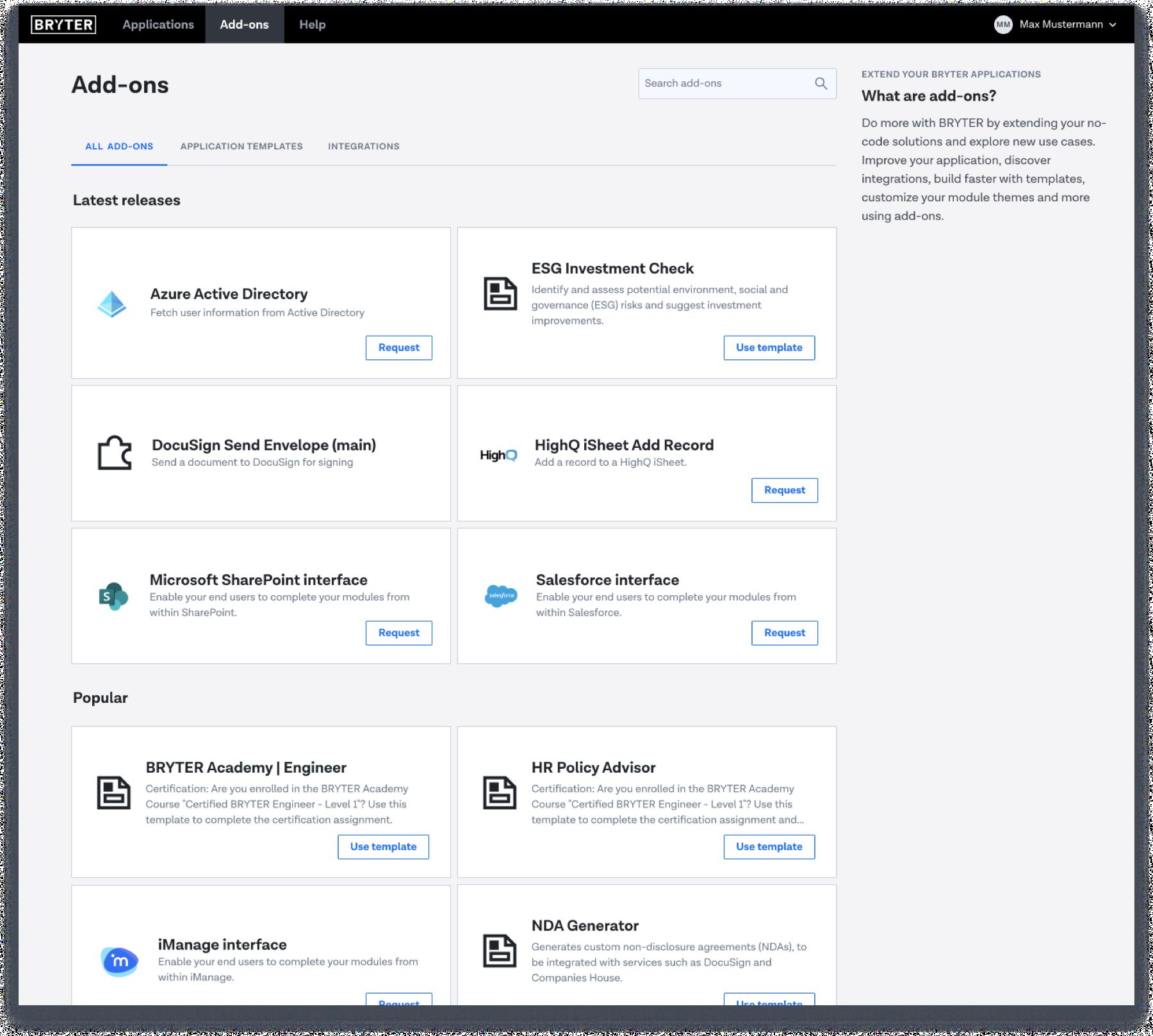
Within the main BRYTER Service Hub, I designed an Add-Ons page — a store-like experience where customers could discover, learn about, check availability of, and request integrations. This increased visibility and reduced the manual burden on CSMs who had previously been the only channel for this information.
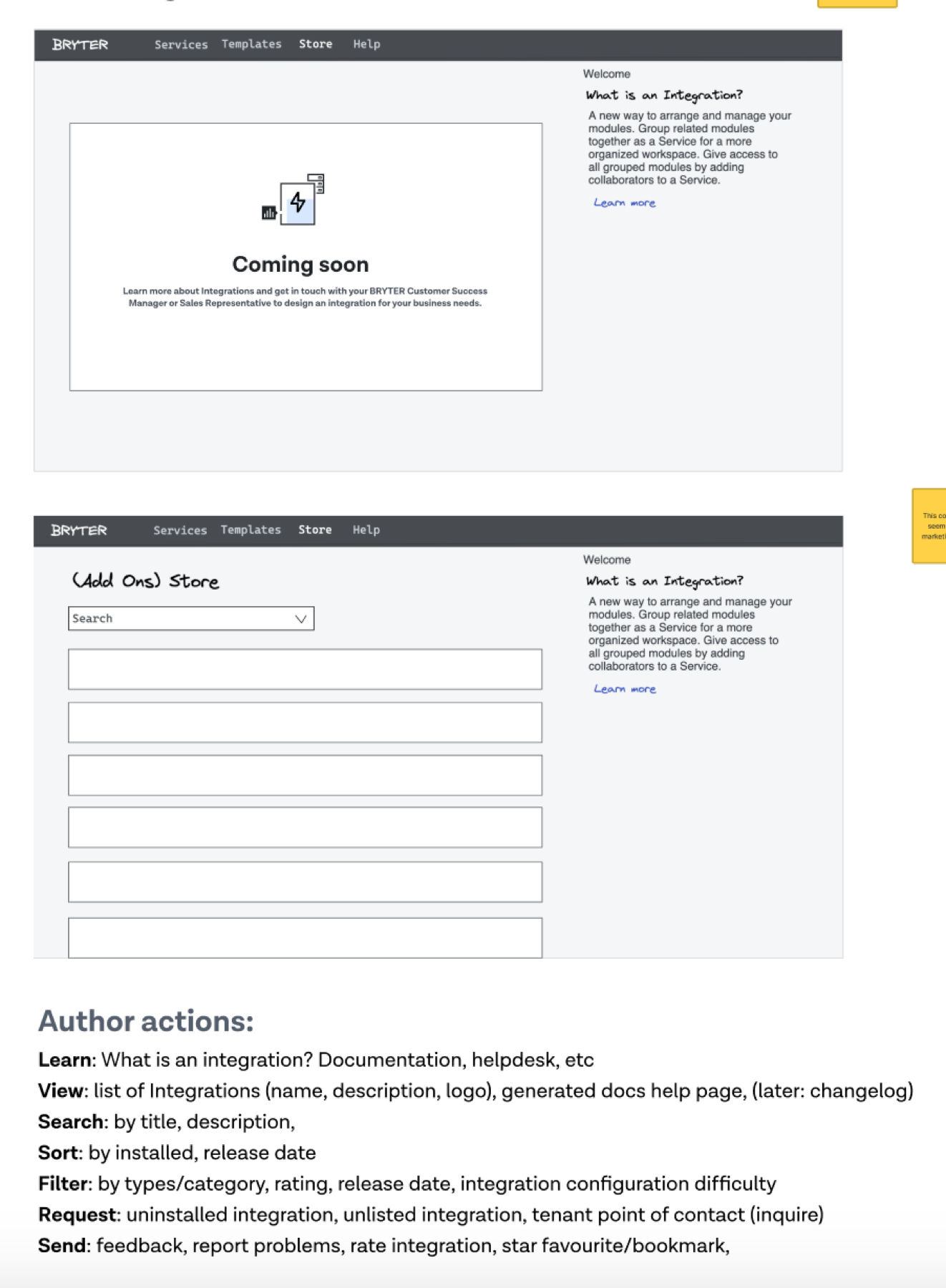
Before building the full feature, I validated interest with a teaser page. I then usability tested the full Add-Ons page with targeted users at different knowledge levels, iterating before handoff.
Outcome
- Visibility and discoverability of integrations increased, validated through Heap analytics
- Reduction in CSM time spent manually explaining and demoing integrations
- Positive feedback from CSM team on reduction in support requests
- Teaser page validated interest before full build — de-risked development investment
Due to a shift in OKRs and scope, features like search, sorting and managing integrations were not included in the initial release.